From 'mad' to mainstream: How Newcastle's property market has evolved
When GWH made what Managing Director Jonathan Craig describes as a "bold move" into apartment development in Newcastle more than a decade ago, the city's residential market looked considerably different.
Apartment living was far from established, the city centre remained dominated by older detached housing, and GWH's decision to acquire a site for what was then one of Newcastle's tallest residential buildings raised more than a few eyebrows.
"People thought we were mad," Craig recalls.
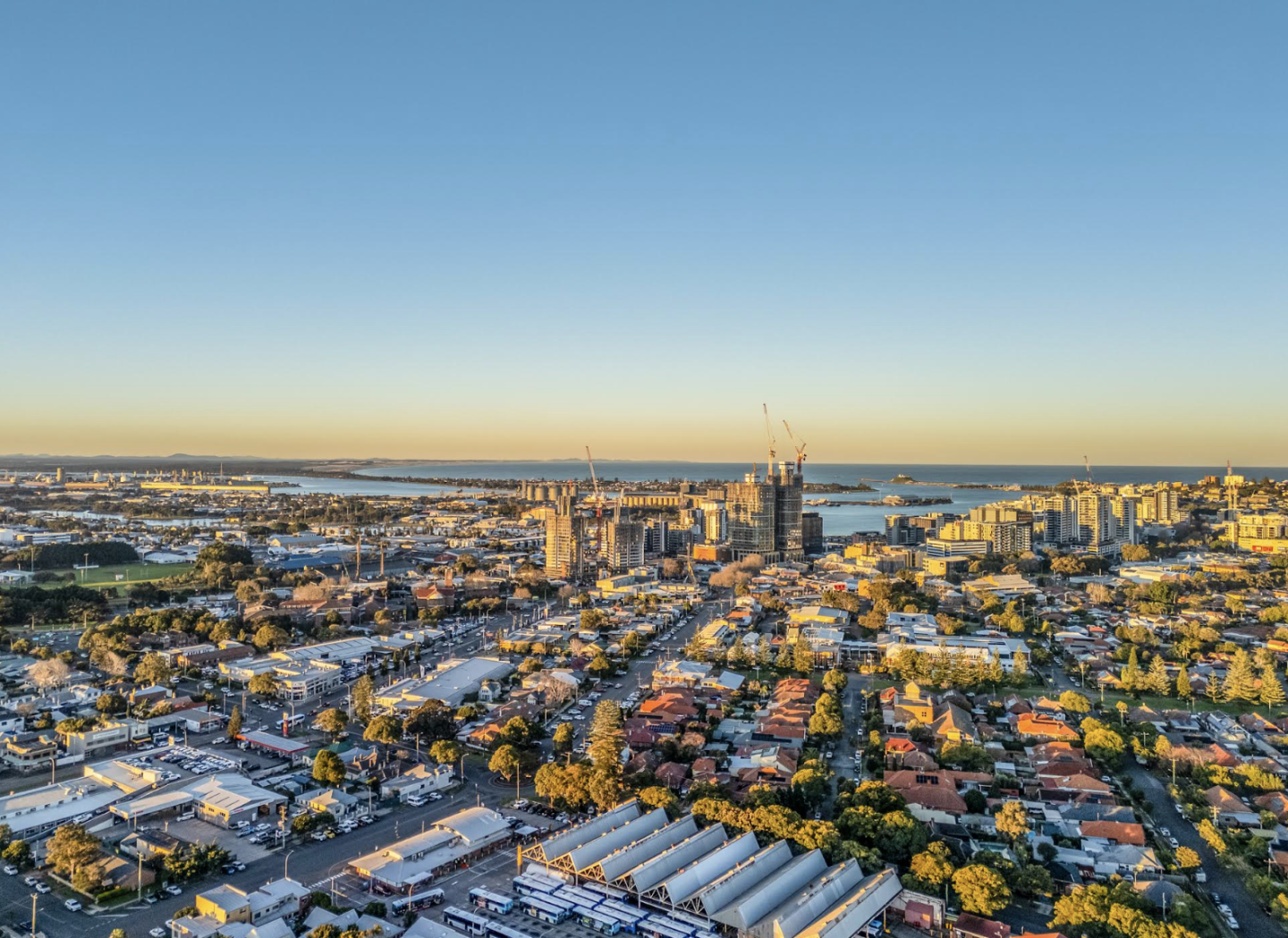
A decade later, the Newcastle Craig was taking a development risk on is almost unrecognisable.
"The market is now incredibly well-educated and much more open to what apartment living can offer."
The evolution of Newcastle's apartment market is now being matched by something much bigger happening across the wider Hunter economy.
Australia's largest regional economy, with a Gross Regional Product of $97.57 billion, is currently absorbing one of the most significant waves of public and private investment in its history.
More than $17 billion in committed capital was announced across the Hunter in just six weeks in mid-2026, spanning transport manufacturing, renewable energy, defence, infrastructure and the return of steel production to Newcastle.
The NSW Government has committed $12 billion over 15 years to next-generation train manufacturing, while a $1.8 billion pumped hydro project has been approved to repurpose former mining infrastructure for renewable energy.
Greensteel Australia has announced a $500 million electric steel mill on the former BHP Steelworks site, bringing steel production back to Newcastle for the first time since 1999, while Orica has committed $432 million to renewable hydrogen. Lockheed Martin has also broken ground on an $86 million defence precinct, while the estimated $2.24 billion M1 Pacific Motorway extension is due for completion by the end of the year.
The significance for Newcastle's property market is not simply the dollar value of the investment, but the breadth of industries behind it.
The Hunter already supports around 273,000 jobs across health, education, defence, manufacturing, construction and tourism, reducing the reliance on any one sector that has historically characterised many regional economies.
Major employment anchors include RAAF Base Williamtown, John Hunter Hospital and the University of Newcastle, while Greater Newcastle has been ranked fourth nationally by LinkedIn for fastest-rising career opportunities.
That employment base sits alongside infrastructure that increasingly makes the "regional" description of Newcastle feel outdated.
The city has one of Australia's most significant deep-water ports, an international airport and established road and rail connections with Sydney and the National Freight Network.
For Craig, who has spent almost 30 years with GWH, the current cycle is very different from the Newcastle market the developer was building into a decade ago.
He joined GWH shortly after it was founded in 1995, initially working with founders Hilton Grugeon and Grahame Chevalley as the company developed industrial and commercial projects across Newcastle and Maitland.
GWH subsequently moved into apartment development, and Craig has been Managing Director since 2003.
That has given him a front-row seat to Newcastle's transition from a market dominated by local buyers and detached housing to one increasingly attracting professionals, investors and purchasers from outside the region.
GWH's own buyer profile demonstrates the change.
Around five to seven years ago, approximately 75 per cent of its purchasers were local downsizers living within 40 kilometres of Newcastle. The buyer pool has since widened considerably, with younger professionals and investors becoming a greater part of the market.
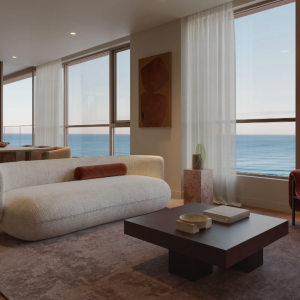
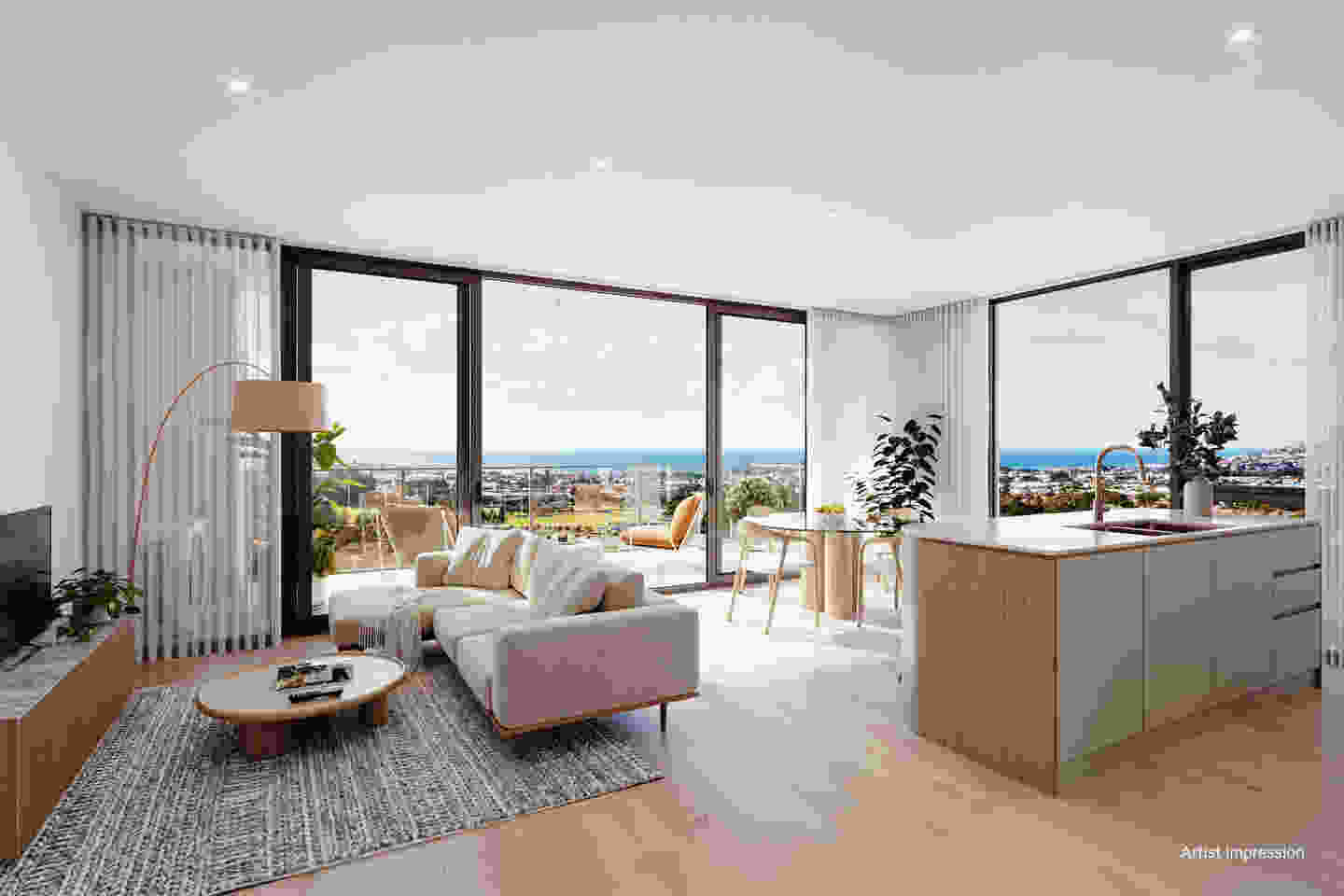
The apartments themselves have changed with them.
"We started with a residential rooftop in 2018, and then added a pool and gym," Craig says.
"Now our developments include all of the above plus cinemas, steam rooms and multiple rooftop entertaining areas."
The next phase of Newcastle's evolution will be driven as much by housing supply as buyer preference.
The Hunter's population of around 680,000 is projected to approach 900,000 by 2041, creating demand for more than 100,000 additional homes.
Residential vacancy is already sitting at just 1.06 per cent, less than half Sydney's rate, while annual property growth is running at 5.4 per cent.
Average unit rents have increased by more than eight per cent annually over the past five years.
Housing also remains around 40 per cent more affordable than Sydney, an increasingly important advantage as Newcastle competes for skilled workers and professionals who no longer necessarily need to live in a capital city to access high-paying employment.
Craig believes it is the combination of population growth with an already established economic and infrastructure base that differentiates the Hunter from markets where investment is dependent on future infrastructure being delivered.
"When you invest in a market where population grows on top of established infrastructure and essential services, you are not speculating on growth, you're investing in durability," Craig says.
GWH's own completed apartment portfolio provides one measure of how that shift has played out.
Across 12 tracked resales at SKY Residences at 509 Hunter Street and 386 King Street Newcastle, buyers averaged $309,407 in capital growth over an average holding period of two years and four months.
Independent research firm Realogic also assessed a current GWH development in Newcastle West in April 2026, awarding it an A+ Investment Grade rating, a threshold GWH says fewer than five per cent of assessed projects achieve.
GWH itself has grown alongside the city.
The group has delivered more than $2.5 billion in projects over its 30-year history and maintains a 100 per cent completion rate, while more than 900 homes have been delivered since 2017.
Its model is also considerably more integrated than the typical developer-builder structure.
Under the wider Hunter Construction Group, GWH's directors have interests across businesses supplying aggregate, concrete, precast, structural steel, windows and geotechnical services, while the group's building management arm becomes involved following completion.
"We very literally deliver the developments from the ground up," Craig says.
Craig is also a Director of XCap, which provides regional property funds and finance for developers and investors, giving him exposure to both the development and investment sides of the market.
GWH continues to back Newcastle through its own development pipeline.
Having delivered more than 700 apartments since moving into multi-residential development, the company is progressing projects including ERA in Newcastle West, while one of its most significant future opportunities is a 6,038 sqm amalgamated site incorporating the former Cambridge Hotel, earmarked for a major mixed-use precinct with retail, hospitality and residential towers.
For Craig, the transformation is particularly stark given what Newcastle looked like when GWH first ventured into apartments.
A market where a 13-storey residential building was once considered a bold move is now dealing with population growth, housing shortages and billions of dollars being committed to industries that will underpin its next generation of employment.
Newcastle may still technically be a regional city. Increasingly, its economy, infrastructure and property market suggest otherwise.
Joel Robinson
Joel Robinson is the Editor in Chief at Apartments.com.au, where he leads the editorial team and oversees the country’s most comprehensive news coverage dedicated to the off the plan property market. With more than a decade of experience in residential real estate journalism, Joel brings deep insight into Australia’s evolving development landscape.
He holds a degree in Business Management with a major in Journalism from Leeds Beckett University in the UK, and has developed a particular expertise in off the plan apartment space. Joel’s editorial lens spans the full lifecycle of a project, from site acquisition and planning approvals through to new launches, construction completions, and final sell-out, delivering trusted, buyer-focused content that supports informed decision-making across the property journey