 BuyingRBA hikes rates to 15-year high: How does it impact off-the-plan apartment buyers?
RBA hikes rates to 15-year high: How does it impact off-the-plan apartment buyers?
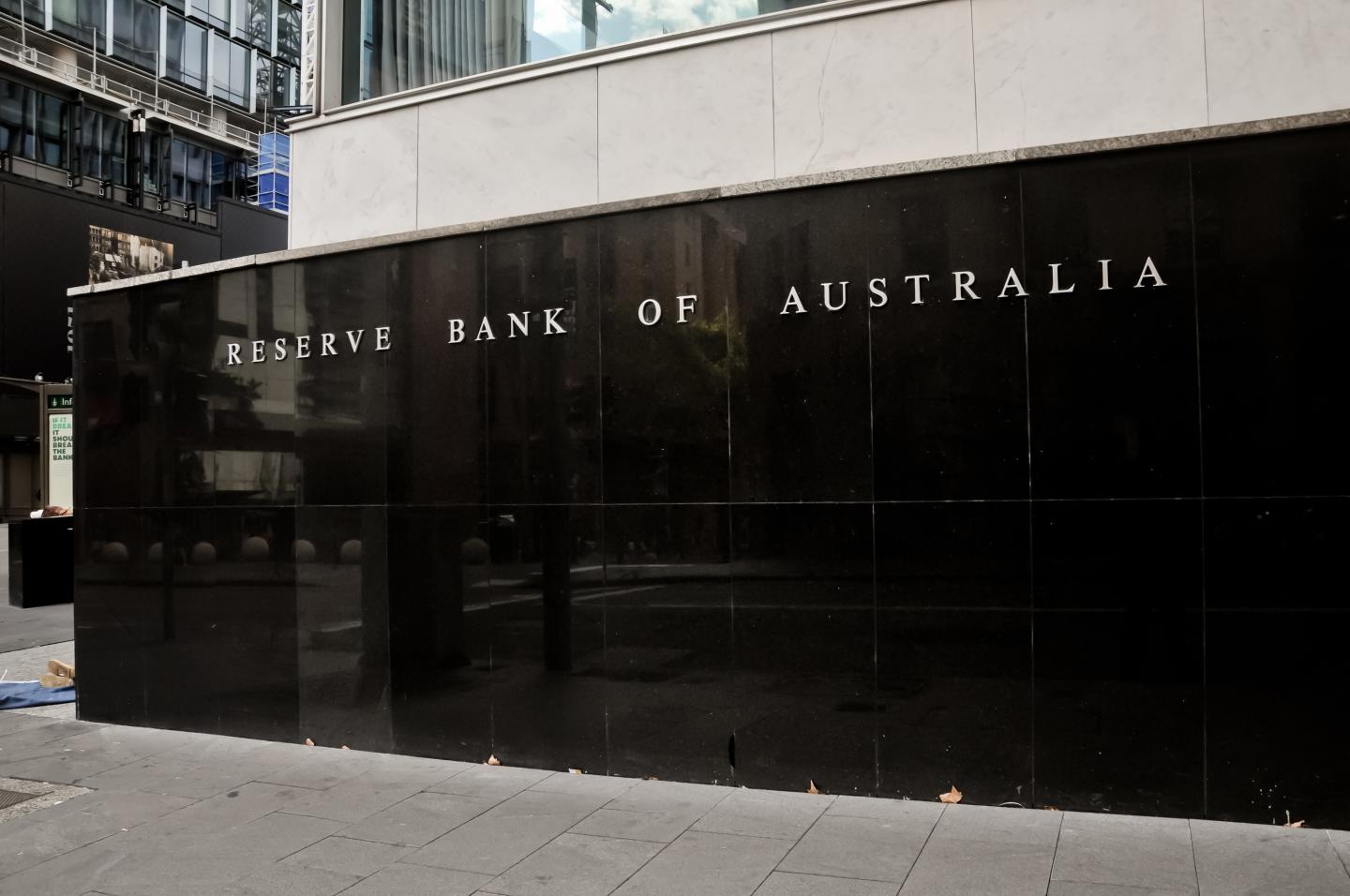
The Reserve Bank of Australia's latest interest rate hike will immediately increase repayments for hundreds of thousands of mortgage holders.
For someone buying an off-the-plan apartment that might not settle for another two, three or even four years, however, the equation is considerably different.
The RBA on Tuesday lifted the cash rate by 25 basis points to 4.60 per cent, its fourth increase this year and the highest cash rate Australia has seen since 2011. The central bank pointed to stubborn inflation, higher global energy prices and continued capacity pressures across the economy as reasons for tightening monetary policy again.
For an established property buyer taking out a mortgage today, the impact is relatively straightforward. Higher rates mean higher repayments and generally lower borrowing capacity.
For an off-the-plan buyer, there are two sides to the story.
One is what higher interest rates do to the apartment that needs to be delivered.
The other is what interest rates look like when the purchaser actually has to pay for it.
Why today's interest rate isn't necessarily an off-the-plan buyer's interest rate
The structure of an off-the-plan apartment purchase makes interest rates slightly different to buying an established home.
Typically, a purchaser signs a contract and pays a 10 per cent deposit, subject to the individual project's contract and deposit arrangements.
They don't take out a mortgage for the remaining 90 per cent at that point.
There are generally no mortgage repayments on the apartment while it is being built because the balance of the purchase price isn't due until settlement.
That can be two or three years away. On some projects launching today, it could be 2029, 2030 or beyond.
So while a buyer should absolutely understand what a 4.60 per cent cash rate means for borrowing conditions today, there is another question that is arguably more important.
What will interest rates be when the apartment settles?
Nobody can answer that with certainty.
The RBA itself isn't promising that rates have peaked. In announcing Tuesday's increase, it explicitly left open the possibility of increasing the cash rate further if inflation requires it.
There is, however, an important distinction between the immediate outlook and where rates could be several years from now.
Both Commonwealth Bank and Westpac's current forecasts have rate cuts beginning in August 2027. CBA expects 50 basis points of reductions across 2027, although it has pushed the timing of those cuts back as inflation has proven more persistent. Those are forecasts rather than guarantees, and another increase remains possible before the easing cycle begins.
For someone buying an apartment settling in 2029 or 2030, it illustrates why simply taking today's mortgage rate and assuming it will apply at settlement can be misleading.
Equally, a buyer shouldn't assume rates will definitely be lower.
The sensible calculation is to consider a range of possible settlement rates and understand whether the apartment remains affordable under each of them.
Higher rates hit the apartment long before the buyer settles
There is another side of Tuesday's decision that receives considerably less attention.
Interest rates don't just affect the person buying the apartment.
They affect the developer trying to build it.
Apartment developments are capital-intensive projects that can take years to acquire, plan, finance and construct.
Higher interest rates increase the cost of debt across that process. Developers can face higher holding costs on land, more expensive development and construction finance, and tougher lending conditions when seeking the funding required to commence construction.
Builders, subcontractors and suppliers are operating in the same higher-cost economy.
That matters because Australia is already trying to deliver new housing in an environment where the cost of land, labour, materials, infrastructure, finance and regulation has risen substantially.
The Housing Industry Association recently warned that falling established dwelling prices do not automatically make new housing cheaper to deliver. If construction and financing costs remain elevated, fewer projects can reach the point where they are financially viable.
That becomes particularly important in the apartment market.
A developer might have planning approval to build 200 apartments, but approval doesn't mean those apartments will necessarily be built.
The project still has to stack up.
The feasibility equation
Every apartment development ultimately has a feasibility equation sitting behind it.
On one side is what it costs to acquire the land, design the project, obtain approvals, finance it, market it and ultimately construct it.
On the other is the revenue generated by selling the apartments.
When the cost side rises, something has to give.
Developers can seek higher apartment prices, redesign projects, reduce costs, wait for market conditions to improve or decide not to proceed at all.
Higher rates can also affect the other side of the feasibility at exactly the same time.
Purchasers have less borrowing capacity, investors can become more cautious and sales campaigns can take longer to achieve the pre-sales generally required to secure construction funding.
The result can be a double hit: the project becomes more expensive to deliver at the same time as the buyer becomes more constrained in what they can pay.
Industry groups are already warning about the effect weaker confidence and feasibility are having on the housing pipeline. The Property Council has argued that when projects no longer stack up, fewer homes ultimately make it into construction.
That is why interest rate increases can eventually become a supply issue as much as a borrowing issue.
Today's buyer is effectively buying tomorrow's apartment
This is where off-the-plan property becomes particularly interesting.
Someone buying an established apartment today is buying in today's market, generally borrowing at today's rates and moving into an apartment that has already been built at yesterday's construction cost.
An off-the-plan purchaser is buying something that still has to travel through the development and construction cycle.
A buyer purchasing today for $1 million might pay a $100,000 deposit and then, depending on the contract, have no further purchase price to pay until the building is completed.
During those intervening years, the developer is the party dealing with the cost and complexity of delivering the building.
For the purchaser, the major financing event comes at the other end.
As settlement approaches, the buyer needs to obtain finance for the balance, the bank values the completed property and the purchaser's borrowing capacity is assessed under the lending conditions that exist at that time.
That last point matters.
Banks don't simply lend based on the headline mortgage rate. APRA currently requires regulated banks to assess new residential borrowers using a serviceability buffer of at least three percentage points above the loan rate.
A buyer therefore needs to think about both the likely mortgage rate at settlement and whether their income, debts, expenses and overall financial position will support the loan when the time comes.
A 2030 settlement is a very different proposition
Consider an apartment purchased in late 2026 that won't settle until 2030.
There could be numerous RBA meetings, economic cycles and changes in lending conditions between exchange and settlement.
Tuesday's 4.60 per cent cash rate tells that buyer something important about the economy today.
It does not tell them what their mortgage rate will be in 2030.
That's one of the peculiarities of buying off the plan.
The price of the apartment is generally locked in when contracts are exchanged, while the cost of financing the balance isn't known until much later.
That can work both ways.
If rates are lower by settlement, borrowing conditions may be more favourable than they are today.
If rates remain elevated or move higher, the purchaser needs to be able to accommodate that.
The same applies to valuations. A purchaser is contracted to the agreed purchase price regardless of whether a lender's eventual valuation comes in at the same figure, subject to the particular contract and finance arrangements.
That makes conservative financial planning particularly important for anyone buying several years ahead.
Higher rates today could also affect tomorrow's apartment supply
There is a broader consequence for apartment buyers.
Every project delayed today is a building that potentially doesn't deliver several hundred apartments two or three years from now.
Australia's housing shortage can't be solved simply by approving more dwellings. Projects need to be financially viable, secure enough pre-sales, obtain construction finance and then actually be built.
Higher financing costs make each of those hurdles more difficult.
And when fewer projects proceed, future buyers have fewer new apartments to choose from.
That supply constraint can eventually put upward pressure on the price required to deliver the projects that do proceed, particularly when construction, labour and land costs remain elevated.
So Tuesday's interest rate increase shouldn't be viewed by an off-the-plan purchaser solely through the question: what does this do to my mortgage repayment?
For many buyers, there isn't a mortgage yet.
The better questions are what higher rates mean for the cost and supply of the apartment being delivered, how far away settlement is, and what a realistic range of borrowing conditions could look like when that settlement eventually arrives.
The cash rate is now at a 15-year high.
For someone settling next month, that matters immediately.
For someone putting down a deposit on an apartment that won't be finished until 2029 or 2030, today's rate is only one point on a much longer timeline.
Joel Robinson
Joel Robinson is the Editor in Chief at Apartments.com.au, where he leads the editorial team and oversees the country’s most comprehensive news coverage dedicated to the off the plan property market. With more than a decade of experience in residential real estate journalism, Joel brings deep insight into Australia’s evolving development landscape.
He holds a degree in Business Management with a major in Journalism from Leeds Beckett University in the UK, and has developed a particular expertise in off the plan apartment space. Joel’s editorial lens spans the full lifecycle of a project, from site acquisition and planning approvals through to new launches, construction completions, and final sell-out, delivering trusted, buyer-focused content that supports informed decision-making across the property journey


