Where is the Brisbane market heading?
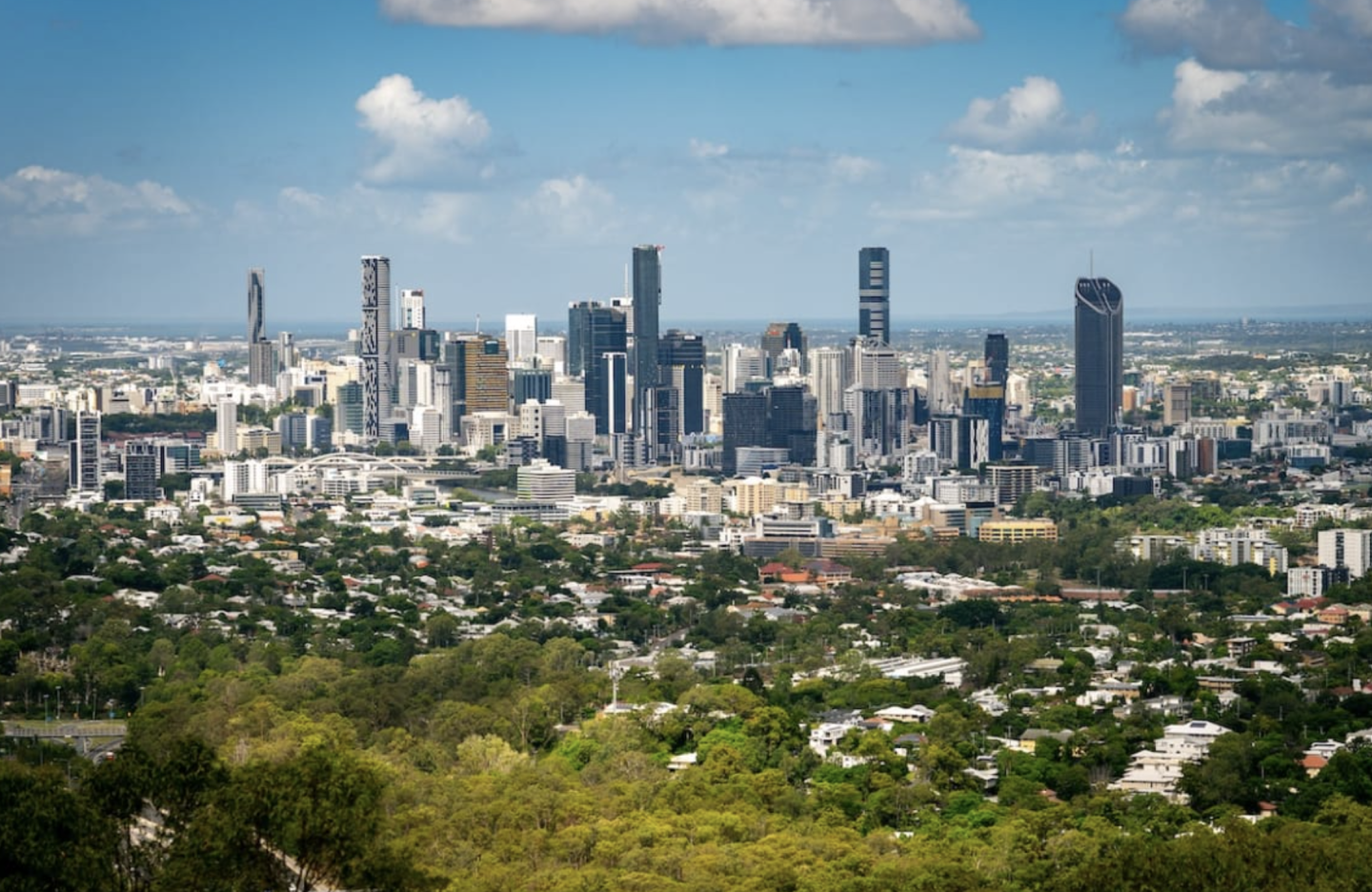
Brisbane has emerged as one of the country's most compelling property markets over the past five years. It feels like a lifetime ago that Sydney and Melbourne dominated the conversation as Australia's benchmark housing markets. Fast forward to 2026, and Brisbane hasn't just joined that conversation, it's leading it.
One of the first questions I'm asked when speaking with developers, planners and industry leaders in Sydney and Melbourne is, "How's the market in South East Queensland?"
The region has become, and continues to be, the envy of the southern states. Developers from across the country have shifted their attention north, attracted by strong population growth, robust demand fundamentals and a planning environment that is often viewed as more supportive of new housing supply. Just as importantly, many are drawn by the lifestyle that South East Queensland offers.
While many locals have been surprised by the pace of growth in recent years, there has long been a belief that Brisbane was undervalued relative to Australia's other major capitals. The transformation of lifestyle destinations such as Howard Smith Wharves and Queen's Wharf, coupled with Brisbane's proximity to the Gold Coast and Sunshine Coast, has elevated the city's appeal and helped it realise the potential many believed was always there.
I recently caught up with several of the developers shaping Brisbane's next wave of apartment projects to understand what they're seeing on the ground, where demand is coming from, and how much further the city's property market can run.
Brook Monahan
Mosaic Property Group
The fundamental drivers of Brisbane's housing dynamics in 2026 are straightforward: a generational transfer of wealth on a scale Australia has never seen, and migration numbers that continue to exceed expectations.
An enormous amount of wealth will move through the next decade. That wave isn't going anywhere. Simultaneously, you can't run migration at the numbers we're seeing, while also having a generational shift of wealth from boomers, and not expect demand to remain strong.
People move here, they bring money, they want to buy a home and create a future.
While top-end product in some pockets has softened from the frenzy of 18 months ago, the wave will remain pretty strong, especially for developers with brand trust and a long-term track record.
The $4 million to $10 million segment remains fairly robust, but buyers are much more educated now than they've ever been. They have access to information and they're smart people. They're generally not willing to trust a new entrant asking $15 million with no track record.
This heightened consumer discernment is reshaping how developers evaluate premium projects.
Don O'Rorke
Consolidated Properties Group
Brisbane's property market is no longer defined by demand, but by delivery.
Strong population growth and the infrastructure pipeline linked to the 2032 Summer Olympics continue to drive long-term confidence, but the key question has shifted. No longer are we asking if enough demand exists, but how much new supply can realistically be delivered in time.
Construction times and costs are the defining constraints.
Costs remain high and are increasingly unpredictable. Recent geopolitical tensions have driven sharp increases in diesel, petrol and key building inputs such as cement and PVC, adding between 3 and 5 per cent to project costs. That can add as much as $125,000 to the entry price of a new three-bedroom luxury apartment.
At the same time, the industry is heading into a period of heightened competition for labour. As Olympic and infrastructure projects ramp up, the availability of skilled trades will tighten further, placing additional pressure on both cost and program.
In this environment, development becomes more selective. There is less margin for error, which is why the focus is shifting decisively toward premium sites and high-quality product.
Only projects with strong fundamentals, considered design and a genuine point of difference will justify the cost of delivery.
Dan Boman
Fortis
Whether Brisbane can sustain its significant dwelling growth remains the million-dollar question.
However, we are seeing considerable depth in the local market, particularly in premium suburbs. Local buyers in these areas are largely not price-sensitive. Many have built substantial wealth in their family homes, with much of that growth occurring over the past five years.
The scale of this appreciation has surprised even long-term homeowners, prompting many to think more strategically about their next move and, in some cases, to speed it up.
These buyers are increasingly informed, paying close attention to supply constraints across the state and recognising the limited opportunities likely to emerge in blue-chip suburbs in the coming years.
While they remain considered in their decision-making, their focus has shifted more towards quality, premium inclusions, fixtures, finishes, and amenities rather than price alone.
Given the constrained pipeline in the premium downsizer segment, there is little to suggest this end of the market will slow in the near term. We expect this momentum to continue throughout the year and well into 2027.
John Kearney
Immerse Projects
Brisbane has been one of Australia's most consistent and resilient property markets for a long time, well before the Olympics-induced demand spike.
A key driver of that resilience is the city's economic foundation. Brisbane is home to a significant number of public sector roles, as well as the headquarters of major mining and resources companies. Regardless of broader market cycles, these employment bases remain relatively stable, supporting ongoing housing demand.
The global attention on the Olympics has also highlighted a gap in the market, particularly in the middle segment, broadly ranging from the $800,000s to the high $1 millions.
This product is rarely found in the inner city or on the outer fringe. Instead, it is best suited to what we describe as the urban fringe. This is where we see the greatest opportunity.
It caters to a segment of buyers seeking quality, well-located homes without the premium price tag of top-end product, and remains one of the most undersupplied parts of the Brisbane market.
Christie Leet
Sherpa Property Group
The more well-trodden path for developers operating across both Brisbane and the Gold Coast has typically been for those based in the capital to expand south to the Coast. We've taken the opposite approach, recently expanding into the Brisbane market, and we're glad we did.
Similar to the Gold Coast, where we introduced Flourish, a brand focused on delivering more price-accessible apartments, we identified the same gap emerging in Brisbane.
There is strong demand for one-bedroom apartments under $1 million and two-bedroom apartments under $1.5 million, yet these options remain relatively scarce in a market increasingly dominated by larger, downsizer-oriented product priced well above $2 million.
A number of macro factors are shaping the development landscape, from both a construction and buyer perspective, including cost escalation and higher interest rates.
The entry-level market is being squeezed from both sides, which inevitably pushes up the prices required to deliver new apartments.
In our view, the strongest opportunities currently sit within this segment of the market, and we expect that to remain the case in the years ahead.
Joel Robinson
Joel Robinson is the Editor in Chief at Apartments.com.au, where he leads the editorial team and oversees the country’s most comprehensive news coverage dedicated to the off the plan property market. With more than a decade of experience in residential real estate journalism, Joel brings deep insight into Australia’s evolving development landscape.
He holds a degree in Business Management with a major in Journalism from Leeds Beckett University in the UK, and has developed a particular expertise in off the plan apartment space. Joel’s editorial lens spans the full lifecycle of a project, from site acquisition and planning approvals through to new launches, construction completions, and final sell-out, delivering trusted, buyer-focused content that supports informed decision-making across the property journey