NSW government could tax property owners set to gain from transport upgrades
The NSW government could tax investment property owners who will benefit from its newly unveiled 20-year transport upgrade.
The $100 billion, 20-year draft transport master plan includes new motorways, new rail links, an underground harbour rail crossing in Sydney, and other infrastructure, public transport and service upgrades.
Among the locations with mooted transport infrastructure improvements are the eastern suburbs light rail, Leppington in the south-west growth centre with a new rail link, Parramatta with motorway upgrades, Rouse Hill in the north-west growth centre with a new rail link from Chatswood, Sydney CBD upgrades and Dee Why, with new bus rapid transport.
Click to enlarge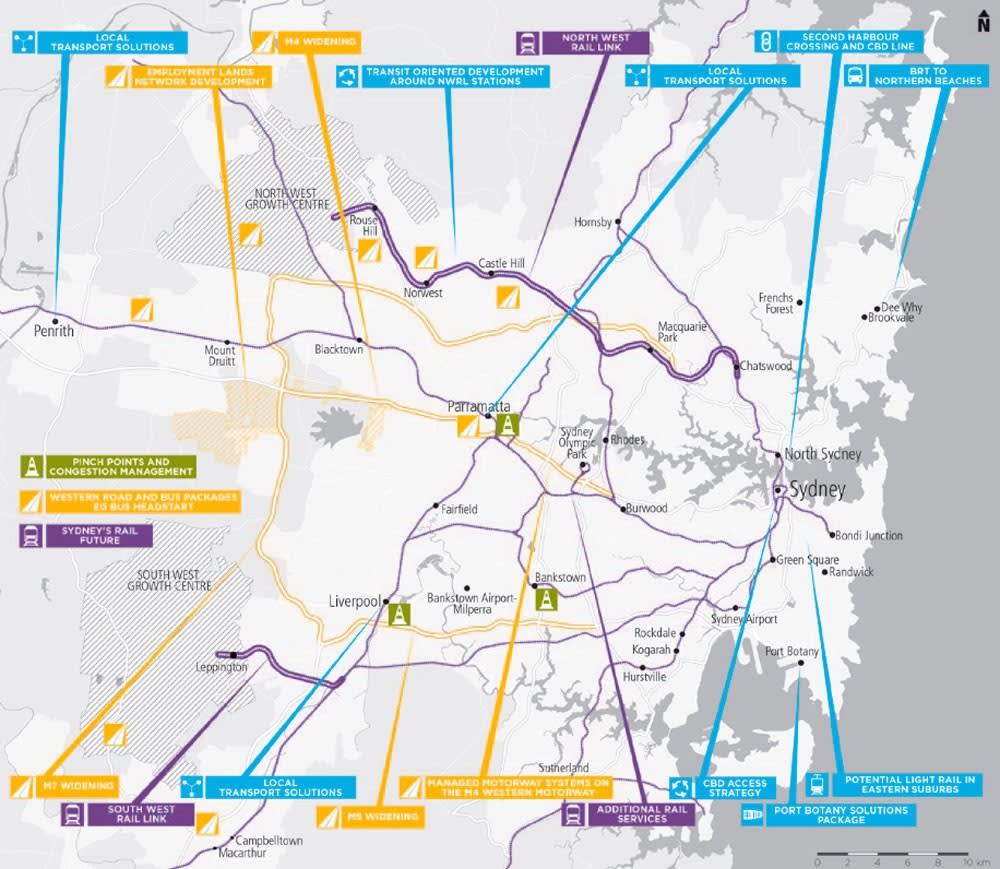
The report puts forward plans to partially fund the massive upgrade by levying property owners who might benefit from any upgrades.
“The development of new transport infrastructure positively influences the appeal of new neighbourhoods and communities as a result of improved transport access – regardless of whether property development takes place before or after the creation of the transport links,” the report says.
While no solid numbers are put forward, the report cites examples from other countries where transport upgrades have been financed by taxing land- owners.
“Many countries, such as Hong Kong, Singapore, Japan and the United States, have introduced measures to capture a share of the additional value to nearby properties, including developer contributions and targeted levies. We have reviewed such options and identified those with the greatest potential for application in NSW.”
The report cites Chicago’s tax increment financing (TIF) scheme as a possible model for financing the scheme.
Popular in the US, TIF schemes use projected future tax gains to subsidise infrastructure that when built will lead to those gains. The new infrastructure pushes up real estate prices around the area.
Chicago runs 130 TIF districts, which earned the city US$500 million in 2006.
It applies to both commercial and residential properties.
The report also references developer contributions in the UK where charges vary with the scale of a development.
Another option raised is transport levies such as those imposed in Sunshine Coast and in France. Residents of the Sunshine Coast paid an annual $20 fee per property to help pay for infrastructure upgrades.
The report also recommends commercial developments alongside public transport infrastructure to pay for the upgrades.
“The sale of these commercial rights, or the lease income over time, can help to reduce the cost of the transport asset.”
“Southern Cross Station in Melbourne is one such example, where a PPP [public-private partnership] project and the sale of the adjacent retail and office development sites partially offset the Victorian Government’s total project costs.”
Premier Barry O’Farrell and Transport Minister Gladys Berejiklian have not committed to any of the recommendations except the $8.5 billion north-west rail link in Sydney and the harbour crossing.
Other financing methods raised in the report include distance-based tolls for roads and congestion charges.