There is more to a property bargain than price

It sounds simple enough. You embark on a journey to find the perfect property. This could be either your dream home to live in or that next investment property to add to your portfolio to make a sound return and a nest egg for the future. It doesn't matter if it's a tiny studio apartment with one window or a grand palatial manor on acreage, you've decided now is the time you want to take that plunge. And good on you!
So you do your due diligence, research, and investigation, all to get your ducks in a row. And now, armed with your precise budget, list of “needs” and “wants”, and target town/suburb/city, you hit the market to go shopping. Better still, your peers, your friends, family, colleagues, and mentors are all saying, “It's a cooler market, you'll pick up a great bargin!” This all sounds great! Off you head to your first weekend of open home inspections with a whimsical spring in your step. But as you look at places you start to ask yourself, “How do you I know if this is a bargain?”
Before you can know if you have found a bargain, you must first think about how to define the word itself, because it actually means different things to different people. More commonly, people tend to associate the word “bargain” with words like “cheap”, “reduced”, “discounted” and “low-cost”. And personally, those kinds of definitions are the first things that come to mind when I hear the word. I'd even go one step further and say that before becoming a property investor myself, my expectation was that a bargain is price reduction. But a true bargain, should you find one, can be so much more than this.
I got to thinking about how you can go beyond price and got stuck on the letter P. This is a good thing. My definition looks something like the below. And note, your perfect bargain could be just one of these factors, a mix of a couple of them, or indeed a blend of the entire list. It all depends on the property itself, and your attitude.
Price:
Yes, I put it up top. Undoubtedly, if a three-bedroom house in your target suburb medians at say $600,000, and you've found one asking $500,000, it's worth a first look. And lots and lots more looks. Price is a great indicator, but remember, a heavily discounted price is heavily discounted for a reason. You'd just prefer that reason to be something like a foreclosure, unfortunate death, etc, rather than say, an entire house needing re-stumping.
Potential:
By this I mean scope for renovation or improvement. Improvement isn't translated as renovation! For instance, a townhouse on a hill, 10 kilometres from the city, with a giant tree in the front garden. It just so happens that tree is blocking a magnificent view of the skyline (or beach, or mountains, or whatever). You know if you had lopping approval, that view would add instance value. Or, indeed, it could merely be that a couple licks of paint refreshes it completely.
Position:
Location location location is what they always say. The good old “worst house in the best street” comes to mind here. Truth is, it's more than just the location of the dwelling, but the position of other factors (is it north-facing? Does it have a great view? Is it a quiet street?).
Prestige:
There is the obvious prestige of the suburb/neighbourhood itself, along with the street within that neighbourhood. But what of other prestigious things? Unique architecture, for one. Everyone seems to go ga-ga for Art Deco, for instance (even though we know agents market some properties with the dubious tag “Art Deco-style”), and true Art Deco indeed only exists in a finite number of properties. Why? They simply aren't making that style any more. Or it could be more topography. Sure, position takes care of best suburb/street, but what of that amazing golf course/marina/country club nearby? Future buyers of your property might find this locale hugely prestigious.
Let's take an example that actually happened to me recently. I inspected a property and was convinced it was a bargain. It was a top-floor two-bedroom renovated apartment in a very popular Sydney inner-west suburb, in a quieter street with a private leafy outlook and many other trimmings. It was going for the same asking price as others in the area, unrenovated, on busier roads. I knew I had to act quickly. The property was listed only on Thursday, and Saturday was to be the first viewing. I knew right away that there would be no second viewing needed, and I was right – it was snapped up less than 11 minutes after the viewing timeslot finished! How do I know? Well take a guess who put the first offer in? Yours truly! The agent emailed back, seconds later, advising an offer was made at asking price. I would have happily paid more because I was confident it was a bargain, but I knew I was already at my comfortable maximum (sometimes you have to know when to walk away). The place had a great mix of price, prestige and position. Sure, the potential was minimal because it'd been renovated, but the other three elements made it a true bargain.
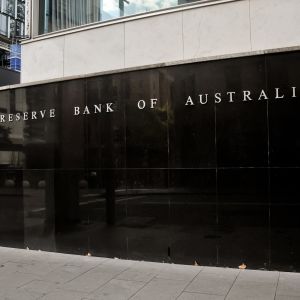
Many markets throughout Australia are indeed in a cooling phase. This is a natural cyclical occurrence in the grand scheme of any property market, and rookie investors should not be scared of it. While the tabloid and fear-producing media may bolster some bold, attention-grabbing headlines likening the state of the property market to, say, the world ending in December (or something equally as dramatic), the reality is the market is in a downswing. The lesson to impart here, then, is that not only can bargains be found and had in all kinds of markets (hot, cold, and everything in between), but bargains can exist in many different flavours (price, potential, position, and prestige). You just need to access which flavours taste better regardless of the temperature.
Cameron McEvoy is a property investor and maintains a blog, Property Spectator.