Measured demand for houses in Liverpool: PRD
A PRD nationwide report has revealed a measured increase in demand for houses in the Liverpool government area in New South Wales, which includes Liverpool, Hoxton Park, Casula, Prestons, Warwick Farm, Moorebank, and Lurnea.
The report shows a 5.9% increase in demand for houses in the six months to April 2013, as well as a 6.1% increase in median house price in the 12 months to April 2013, to $472,000.
In spite of an increase in median price, houses in the Liverpool area remain affordable in comparison to the Greater Sydney median of $684,000.
The report cited infrastructure improvements as the main reason for an increased interest in Liverpool’s property sector.
These improvements include an upgrade to the rail network and expansion to existing health and retail facilities in the area.
Stuart Zullo of Professionals Paradise Realty Casula told Property Observer that demand for houses in the Liverpool area is outstripping supply.
“A lot of people are looking to buy. In the last 12 months I would say there has been a 4 to 5% increase,” he said.
He added that activity in the Liverpool area was made out of different groups of buyers, including investors, people looking to change properties, and first-time home-buyers.
“There are investors coming back into the market which we haven't seen for quite some time,” he said.
Zullo agreed that infrastructure improvements in Liverpool have attracted buyers and investors to the area. He also cited improvements to the M5 motorway as well as connectivity to central Sydney via the M7 motorway as key factors.
Located 32 kilometres south-west of the Sydney CBD, Liverpool has been a major centre in Greater Western Sydney.
The 2011 Census showed that 4.9% of residents have an Indian background and 4.3% of residents have a Lebanese background, indicating that the Liverpool area is rather diverse culturally.
Zullo also added that Liverpool has traditionally been a “lower demographic” suburb. As such, rising interest rates in the last few years have affected activity in the area.
“With interest rates coming down, that is a driving factor. If interest rates stay low, the market progresses in the area,” he said.
Conversely, Property Observer reported earlier this month that the Fairfield-Liverpool region has regained the title of most mortgage delinquencies in Australia.
According to the latest RP Data report, the median sale price for houses in Liverpool is $410,000, up 1.2% on last year. The average discount required to sell a house is 9.3%, while private treaty sales average 72 days on market.
The median asking rent for houses in Liverpool is $380 per week, while gross rental yield is 4.8%.
Houses that have sold recently in the Liverpool local government Area include:
The four-bedroom house (pictured below) sold last month for $460,000 through Garry Dunn Property Agents Hammondville. Prior to this sale, it last sold in 2011 for $405,000, according to RP Data records.
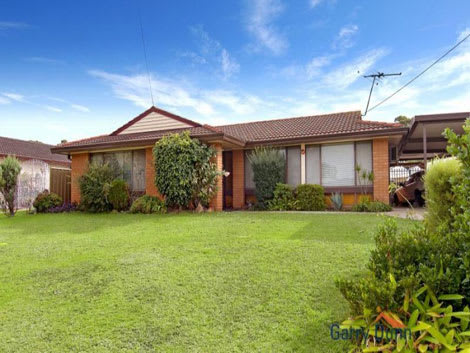
It was listed for sale in June this year for $469,000 and spent 22 days on market. It was also listed for sale in 2011 for “offers above $420,000” when it spent 169 days on the market, according to RP Data records.
In addition, it was listed for rent in April last year at a weekly asking price of $460 per week, according to RP Data records.
The four bedroom house sold last month through Professionals Paradise Realty Casula for $552,000. Prior to this sale, the 321 square-metre home (pictured below) sold for $453,000 in 2007, according to RP Data records.
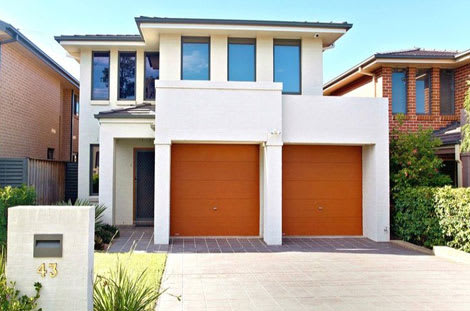
It was listed for sale in May this year and spent 49 days on market, according to RP Data records.
Houses for sale in the Liverpool Local Government Area include:
The five-bedroom brick house (pictured below) has been listed for sale with a price guide of “$475,000-$525,000” through Prudential Real Estate Liverpool.
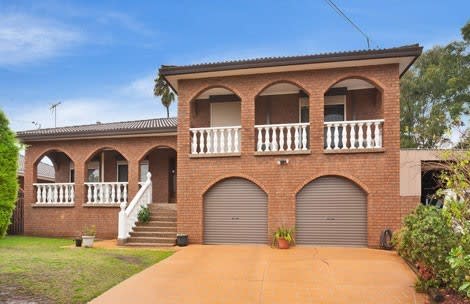
It last sold in 1988 for $118,000, according to RP Data records.
It has been listed for sale in 2009 for $459,000, where it spent 243 days on market. It was also listed for sale in 2006 for $499,950, and spent 8 days on market, according to RP Data records.