InvestingHow to deal with the two most common problems in commercial property investment: Chris Lang
How to deal with the two most common problems in commercial property investment: Chris Lang

Over the past few weeks, you have read the five common myths about commercial property.
And also covered in some detail the five reasons why serious investors prefer commercial property.
Therefore, it's probably time to explore two other issues, which inexperienced property investors often see as being major problems.
Because it can sometimes be difficult to find tenants, you need to significantly reduce the value of a vacant commercial property.
Because banks maintain a lower loan-to-value ratio (LVR) ratio on commercial property, that means you will need to contribute considerably more cash up front.
Let's now unpack these two issues so you can see just how easy it is for you to reshape your thinking about them and thereby gain a strategic advantage in the process.
Finding new tenants
This is probably the number-one concern for most commercial landlords.
In tough times, you need to become a little more creative in your hunt for tenants.
Once you grasp the psychology behind both these methods, you quickly realise that the vacancies are no longer something to be overly concerned about.
But more importantly: being able to snare a vacant commercial property at a discounted price is a blessing, not a problem. You now hold the solution that very few investors are aware of — even some of the pros.
Funding for commercial property
The stated "problem" of commercial property attracting a lower LVR actually contains within it, the very seed of the solution itself.
You see, the value of residential property varies little whether it is occupied or vacant.
A vacant commercial property can significantly increase in value as soon as it becomes leased.
Therefore, your focus should move from being able to borrow only 70% (instead of residentially 85%) of the property's purchase price. And you should concentrate upon borrowing 70% of the increased valuation of your commercial property with a tenant in place.
In most cases, commercial properties are valued by capitalising the net rental your tenant pays. And therefore, having the property fully leased could add around 20% to the value of your property, compared with when it was vacant.
To help you quickly grasp the full extent to which this could benefit you, here's a simple example.
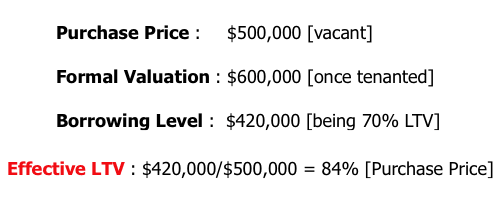
Bottom line: As you can now appreciate, there are definite benefits hidden within these two perceived problems, once you fully analyse and understand the inner workings.
And hopefully, you'll quickly discover some fresh opportunities opening up for you, especially in the present commercial property market.
Chris Lang is an advisor to commercial property investors and gives keynote speeches and regular seminars on the best way to invest in commercial property. He maintains a blog, his-best.biz, which he updates regularly about the best way to get the most out of your commercial property investment.