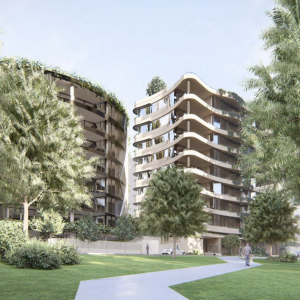
White & Weston in Balwyn reflects Melbourne's education-driven housing demand

Access to high-performing public schools remains one of the strongest, and most measurable, drivers of residential demand in Melbourne’s established suburbs.
As affordability pressures continue to reshape buying decisions, school zoning has increasingly shifted from a secondary preference to a strategic consideration for family buyers.
New 2025 research from Cotality quantifies just how much weight households place on this factor. Across Sydney and Melbourne, families are paying premiums of up to $1.3 million to secure houses within sought-after public school catchments compared with similar homes just outside the boundary. In Melbourne, price gaps in leading school zones have reached as much as $357,000, reinforcing the extent to which access to public education is being capitalised into property values.
This data is reflected in buyer behaviour on the ground. Recent analysis shows some Melbourne families are paying up to 35 per cent more for homes within well-performing public school zones, particularly in tightly held inner and middle-ring suburbs where supply is limited and boundaries are sharply defined.
While the strongest premiums have traditionally been associated with detached housing, the underlying demand drivers, certainty of school access, long-term lifestyle planning, and the rising cost of private education, are increasingly influencing apartment buyers as well.
In suburbs where new residential supply is scarce, apartments located within established school catchments are emerging as one of the few accessible entry points for families prioritising location over land.
Long regarded for its education network, Balwyn remains one of Melbourne’s most tightly-held residential areas, with limited opportunities for new housing, particularly projects that sit squarely within the Balwyn High School catchment, one of the best performing public schools in the area.
The new apartment development White & Weston sits within the sought-after catchment zone, as well as being close to the suburb’s village retail strip and Balwyn Park.
Supermarket giant Coles has teamed up with developer Dimas Property Group to create White & Weston, just 45 large-scale apartments designed by Cera Stribley. The two-, three-, and four-bedroom apartments, are proving popular with a wide variety of buyers, from young families to professional couples, as well as empty nesters.
While the median house price in Balwyn is touching $3 million, two-bedroom apartments at White & Weston start from $1,325,000, and three-bedroom apartments start from $1,837,000.
On top its affordability relative to houses, buyers, depending on the configuration they choose, can save up to $360,000 by buying off the plan, an added cost which is applicable in the established housing market.
White & Weston apartments have been designed with sustainability at the forefront. They will achieve a minimum seven-star energy rating, through features like double-glazed windows, EV readiness, and whole-of-home energy optimisation aimed at reducing ongoing costs. There is also a 52-week defect liability period in place, and a six-year building guarantee for peace of mind.
Builder Aspekt has already commenced construction of the building, and will complete in early 2027.
Developments like White & Weston highlight how school zoning is reshaping not just prices, but housing typologies within established suburbs. As demand to live inside high-performing public school catchments intensifies, apartments and townhome-style projects are increasingly filling the gap between aspiration and affordability.
The question for buyers is less about whether the school-zone premium exists, the data clearly shows it does, and more about how they choose to absorb it. Paying extra for education access can make sense when weighed against private schooling costs and long-term lifestyle goals.
Joel Robinson
Joel Robinson is the Editor in Chief at Apartments.com.au, where he leads the editorial team and oversees the country’s most comprehensive news coverage dedicated to the off the plan property market. With more than a decade of experience in residential real estate journalism, Joel brings deep insight into Australia’s evolving development landscape.
He holds a degree in Business Management with a major in Journalism from Leeds Beckett University in the UK, and has developed a particular expertise in off the plan apartment space. Joel’s editorial lens spans the full lifecycle of a project, from site acquisition and planning approvals through to new launches, construction completions, and final sell-out, delivering trusted, buyer-focused content that supports informed decision-making across the property journey