BuyingMelbourne's easy sales days are over, with new housing market oversupplied, unaffordable and with sluggish rental growth: Michael Matusik
Melbourne's easy sales days are over, with new housing market oversupplied, unaffordable and with sluggish rental growth: Michael Matusik

Last week I gave an address to about 400 members of the Victoria branch of the UDIA. “I appreciate the honesty and directness,” quipped several from the audience after the event. But they were just being nice – I think many wanted to stab me, or at least shut me up. My MO wasn’t to rub anyone’s nose in it, just give out some tough love.
Usually the media is informed about such events and they are spruiked to all and sundry, but not this time. While some in the development industry in Melbourne appreciate that things are going to get tougher, too many are still hoping that things will somehow magically improve. That was what too many in development across Queensland thought too, in late 2007.
According to Mark Twain, “history may not repeat itself, but it does rhyme a lot”.
Here’s what I said:
Click to enlarge
The new housing market will remain tough across Australia and especially in Victoria for some time.
While we do not expect the market to crash, it will be increasingly difficult to make new sales.
People will, of course, purchase new property, but the property on offer will need to be better tailored for, and marketed to them.
The development industry has become quite sloppy in recent times. Sales in the southern states (Victoria largely) have been too easy and the attention to service/detail limited at best.
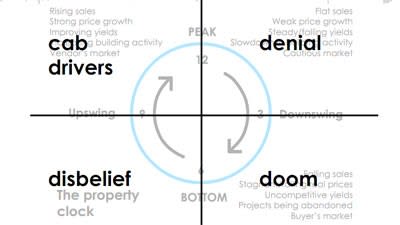
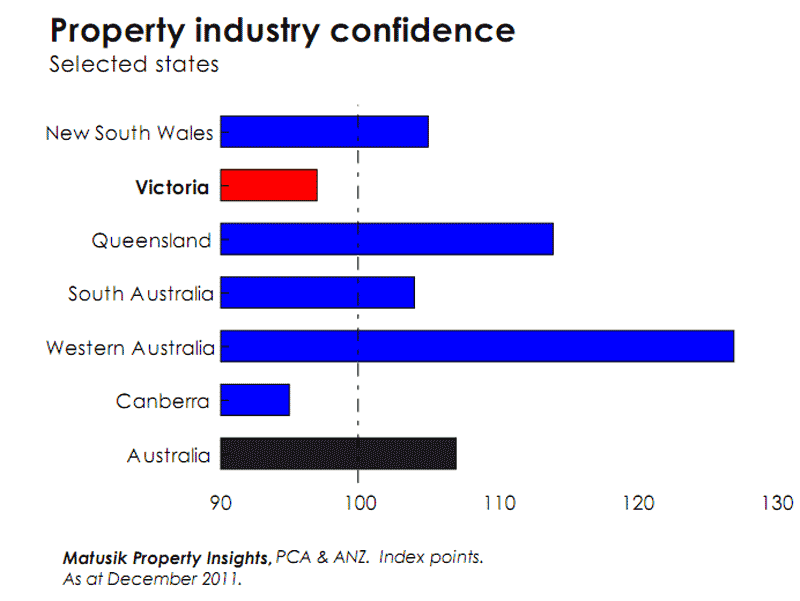
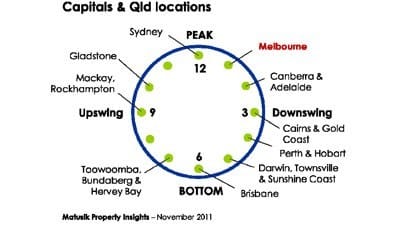
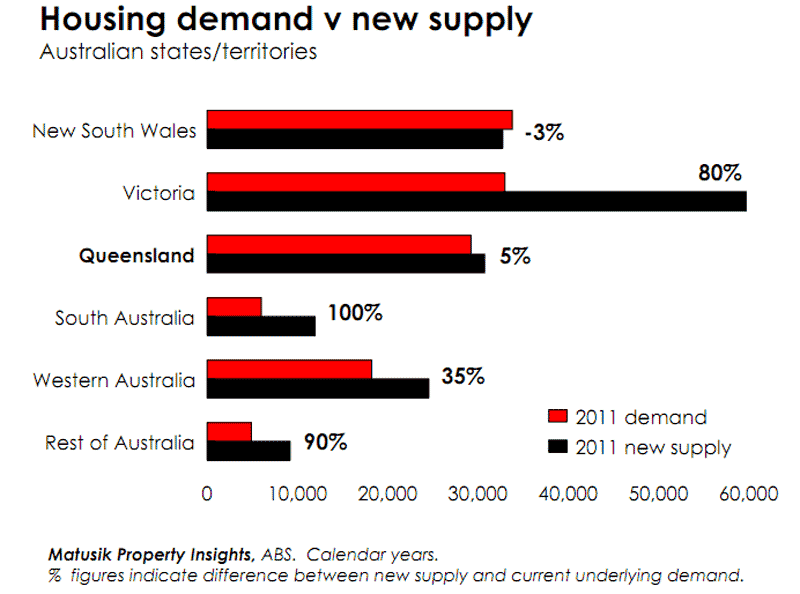
Things are now changing. Melbourne is past its peak and is at one o’clock on the property clock. The Victorian market is now oversupplied with both new and existing stock, confidence is low and there are fewer jobs being created today than in the recent past.
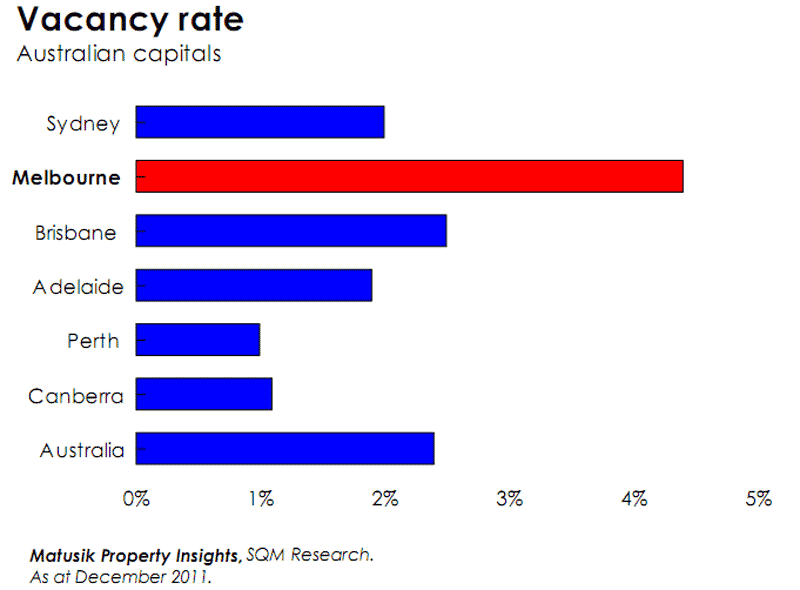
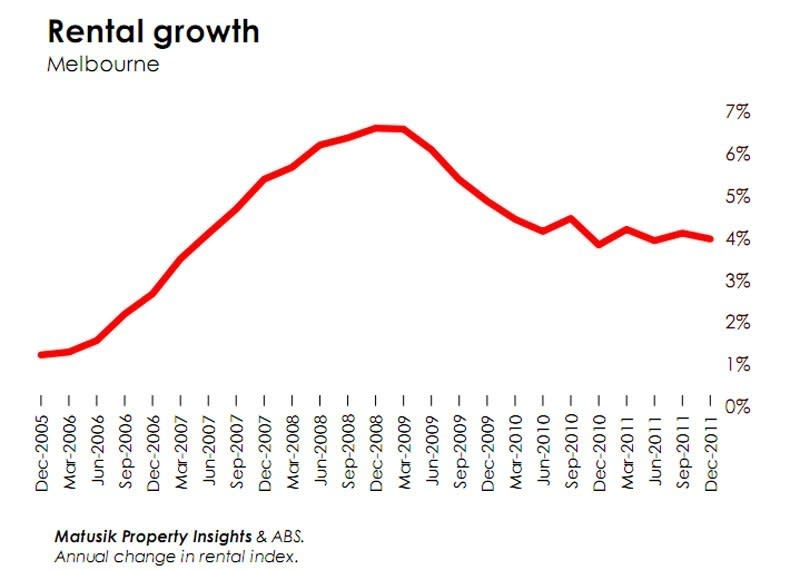
End prices are also high and somewhat unaffordable. Rental growth, while still positive, is now sluggish and is likely to remain so, with the city having the highest vacancy rate of any Australian capital, at over 4%.
Click to enlarge
Brisbane, my home town, in contrast is at the bottom of the cycle and is about to experience a recovery. As noted above, Brisbane was in the same position as Melbourne was in mid-2007.
Click to enlarge
It has taken four years – last year’s flood did delay Brisbane’s upturn by about a year – for Brisbane to start showing signs of improvement. It could take Melbourne this long too – at best two to three years – to recover. History – as well as Mr Twain – supports our claim.
There are several things that the development community can do to improve sales.
- Make their projects look different. Buyers tell us that they are all too generic.
- Provide a lot more detail about future development in their project itself and in the area. Detail is expected regarding the siting of homes and such things as outside entertainment areas, bedrooms and air-conditioning. In a perfect world, developers would be best to sell built stock.
- Don’t hide anything from the public, including full price lists and dwelling designs. They know much more about the project and the competition than sales people give them credit for.
- Implement a loyalty system. Repeat customers should be treated as such.
- Match sales staff (demographic, experience) and the décor, interiors and furnishings (the actual product design of course) to the demographic. A 25-year-old single selling to a middle-aged couple doesn’t work too well.
- Make much more of your brand and development pedigree. Buyers want to know more about who you are.
- Relax at the launch. Don’t put too much pressure on potential buyers then – the time to close is much later in the sales process.
- Follow up constantly and not just before settlement. Buyers want to be informed.
On a final note – people buy something new because it should be less hassle than buying second-hand and fixing it up. Developers need to ensure that the buying experience is hassle-free, too.
New developments meet today’s strict environmental compliances, which help save buyers money and also give them peace of mind when it comes to resale.
Click to enlarge
For investors, buying something new often provides a better return. This is due to the attractive depreciation allowances that come with buying new over old – something that too few investors understand – and that new property, on average, has 15% to 20% more value in it than an older property in the same area. Think about the true cost of a new kitchen, bathrooms, carpeting, painting, landscaping and again all the ESD stuff.
Want a copy of the presentation? Well just click here to download.
Michael Matusik is the director of independent property advisory Matusik Property Insights. Matusik has helped over 500 new residential developments come to fruition and writes the weekly Matusik's Missive.