Unit rents approach house rents in most capitals
Asking rents for units are approaching those for houses in most capital cities, according to Australian Property Monitors.
The rental market growth for units outperformed houses during the year to September, APM senior economist Dr Andrew Wilson says.
During the September quarter median asking rents for houses fell nationally by 0.2% while asking unit rental prices picked up by 1.1% in the quarter.
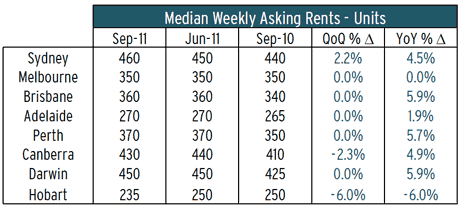
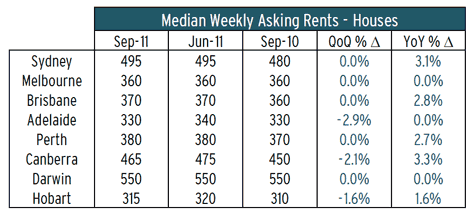
In Melbourne the current median asking rent for units is $350, compared with houses at $360.
In Sydney it is $460 for units and houses at $495.
In Brisbane unit median rent it $360 and house median rent is $370.
In Perth units are $370 and houses are $380.
In Canberra units are $430 and houses are $465.
Wilson suggests unit rental prices increasing at a greater rate in most capital cities compared with houses indicates increased competition from discontented first-home buyers entering the rental market, particularly in late 2010 and early 2011.
“As a consequence, the median weekly asking rentals for units is now fast approaching that of houses in many capital cities, as the overall demand for units for both lifestyle and affordability reasons continues to be greater than the demand for more expensive and generally outer-suburban houses,” says Wilson.
“With the prospect of continued stable interest rates, an expected increase in buyer activity will take the pressure off the rental market by decreasing competition for available rental properties and motivating investors to re-enter the market,” he says.
Wilson says first-home buyers are currently unable to access the market due to affordability and stock availability constraints and as a consequence choose to rent until affordability improves.
Source: APM
Canberra and Sydney led the way in annual growth of house rentals, increasing by 3.3% and 3.1% respectively over the year.
Brisbane and Darwin recorded the largest increase in median weekly asking rentals for units over the year to September, both increasing by 5.9%.
They were followed by Perth, where unit rentals rose by 5.7% over the year, then Canberra up 4.9%, Sydney up 4.5% and Adelaide up by 1.9%.
Melbourne unit rentals were unchanged for the year to September.
Hobart was the only capital to buck the trend, recording a 6% drop in annual median weekly asking rentals for units.
Source: APM
Wilson suggests the subdued growth in rental prices evident in the September quarter should continue into the December quarter as affordability constraints and cost-of-living pressures put a cap on the capacity of tenants to meet rental increases and concerns over the economy continues to foster a relatively conservative attitude by landlords.
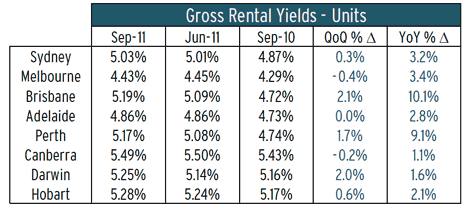
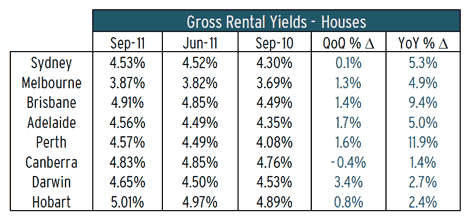
The softening in property prices evident through 2011 has meant that gross rental yields increased marginally despite subdued capital city rental growth over the September quarter.
The gross rental house yields range from Melbourne’s 3.87% to Hobart at 5.01%. Units gross rental yields range from Melbourne’s 4.43% to Canberra at 5.49%.
House rental yields should strengthen marginally as continued weak buyer demand places downward pressure on property prices at a greater rate than rental growth.
“Similarly unit yields should increase as rental growth outpaces prices growth for the remainder of 2011,” Wilson says.
Investors who are drawn to the market by optimising rental growth should check out our guide to choosing the right property manager for your investment.